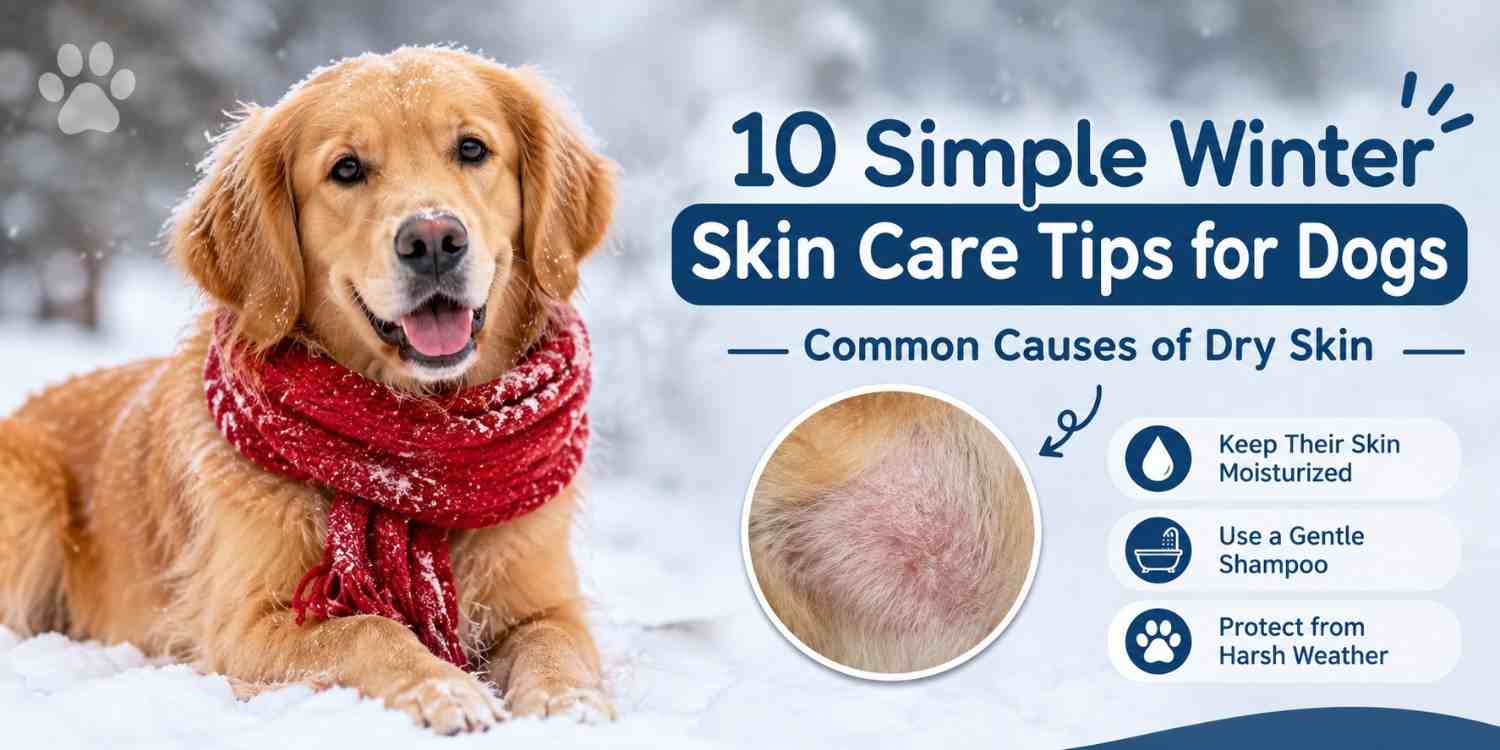
Winter cold could impact more than just your dog’s walks. Dog Dry Skin in Winter is usually associated with dry air, winter heating, and change in routine care. Too much bathing can also lead to flaking skin and dull coat. Increased scratching or appearance of white flakes when brushing are signs that a check of your dog’s grooming routine is needed. A steady regimen of Winter Skin Care for Dogs can help keep the skin comfortable throughout the season. In addition to Winter Grooming for Dogs and coat care routines, dog owners can consider Dog Grooming in Delhi and select the right one for their dog.
Why Do Dogs Get Dry Skin in Winter?
Knowing Common Dog Skin Problems in Winter will help you pick the right approach rather than experimenting with various products.
Cold air outside and heating inside may lead to dehydration of the environment. It can be one of the factors contributing to dry skin. Excessive bathing will exacerbate this issue, since it may strip off natural oils from the skin and the coat. Here are some Winter Skin Care Tips for Dogs by VCA Animal Hospitals - routine brushing, infrequent bathing in winter, use of pet-specific shampoos, and professional consultation before using any supplements.
Winter is not the only possible factor leading to this issue. The other reason for Dry Skin in Dogs can be fleas, mites, allergies, infections, dietary concerns, or other diseases. According to the Merck Veterinary Manual, itchiness is a symptom, not the diagnosis. Skin irritation and scratching should not be neglected. Do not ignore your dog's scratching just because it is winter; Winter Skin Care for Dogs includes checking your pet's health as well.
10 Simple Winter Skin Care Tips for Dogs
1. Brush Your Dog Regularly
Brushing is key in removing loose hair and helping with Dog Coat Care in Winter. Brushing can also help to avoid tangles and enable you to examine the skin for any flakiness, redness, or any strange bumps. Get a brush that is suitable for your dog's coat. Brushing is also helpful in dealing with the shedding problem that occurs during the season. Long-haired dogs require more brushing than short-haired dogs, making brushing an essential part of Winter Skin Care for Dogs.
2. Avoid Unnecessary Baths
Winter Tips for Caring for Your Dog's Skin begin with one basic principle; a bath may help clear out dirt, but excessive bathing may deprive the dog skin of its natural oils. In winter, change the bathing schedule to fit your own rational approach to Winter Dog Skin Care according to your dog’s needs. If your dog is dirty, you need to wash off only this place.
3. Choose a Gentle Dog Shampoo
Dog Skin Care Tips for every day include using a shampoo that is intended for dogs only. Shampoos for humans, even those for babies, might be too aggressive for a dog’s skin. In case your dog suffers from chronic dry skin or irritation, consult with a veterinarian about which shampoo would be best. The proper Dog Shampoo and Conditioner Online will be chosen based on the needs of your pet, not on its label.
4. Keep Your Dog Hydrated
Water is an obvious component of the Winter Skin Care for Dogs regime, and make sure your dog always has access to it. It is possible that some dogs consume less water in cold weather, so you need to make sure the water bowl is accessible and clean. Water helps stay hydrated, but it does not cure any skin issues.
5. Manage Indoor Air
Indoor heating may make rooms comfortable by lowering the humidity levels. As for Winter Skin Care for Dogs, if the air in your house is extremely dry, you can try using a clean humidifier. Make sure to follow the cleaning guidelines for your humidifier and keep your pet away from heat sources.
6. Dry Your Dog After Walks
Rain, moisture in the grass, and cold weather can make your dog's coat and paws wet. You should use a towel to dry off your pet, especially its paws, belly, and other places that moisture can accumulate. Dryness will also help you to detect any irritations on your pet's skin.
7. Check and Clean the Paws
In winter conditions, paw care becomes essential. The paws might develop cracking or become dry; at the same time, dirt might accumulate between the paws. For the purpose of winter skincare of dogs, one should wash the paws carefully with a wet cloth and then dry the paws thoroughly after the walks. It is necessary to look at the red spots, cracks, swelling, or licking.
8. Feed a Balanced Diet
A balanced diet will help in keeping Skin Healthy, Coat Soft and the coat shiny. Omega-3 Fatty Acids are good, for skin health. You must not add fish oil or any other supplement to the dogs food without first talking to a veterinarian. The amount to give will depend on the dogs diet and the dogs size.
9. Use Winter Clothing When Needed
Dogs with short coats, less body fat or who are sensitive to the cold would benefit from the use of an appropriate coat when taken for walks outside. The clothing should provide easy mobility and should not irritate the skin or retain moisture. The coat should be taken off once the dog enters inside if it feels warm.
10. Keep a Regular Grooming Routine
A Good Grooming Routine helps you detect any changes early and facilitates Winter Skin Care For Dogs. Your dog's coat, skin, ears, nails, and paws should be checked as part of your pet's routine care. If your dog's coat is difficult to brush due to knots or shedding, your dog could benefit from professional grooming.
Cloudytailz offers dog grooming services, which include bathing, brushing, clipping, and hygiene care, depending on the type of your dog's coat. Dog Grooming In Delhi can be found here. Pet parents who require dog grooming services can check out the information.
When Should You Contact a Veterinarian?
Although flaking does not necessarily indicate a severe issue, itching is something that should be investigated. Consult your vet if you observe scratching, redness, wounds, scabs, hair loss, odor, greasiness, bleeding or pain. If the problem is sudden or worsening, it should also be evaluated.
According to the Merck Veterinary Manual, parasitic infestations, infections and allergies are some of the most frequent causes of itching in dogs. Your vet can examine your dog's skin and determine whether tests or treatment is required. Do not use any creams, essential oils, shampoos or supplements for dogs without consulting your vet.
Help Your Dog Stay Comfortable This Winter with Cloudytailz
The first step in Knowing How to Prevent Dry Skin in Dogs is basic. Good Winter Skin Care for Dogs begins with some small habits: gentle brushing, responsible bathing, clean paws, fresh water, and balanced diet. This will be helpful for healthy coat, but chronic skin issues require a visit to the veterinarian, not self-medication.
Cloudytailz provides dog grooming and pet care services with emphasis on hygiene, comfort and coat care. Should you need some assistance with creating the right grooming schedule, feel free to contact us via Google Search. Some basic care can make the winter easier for your dog.